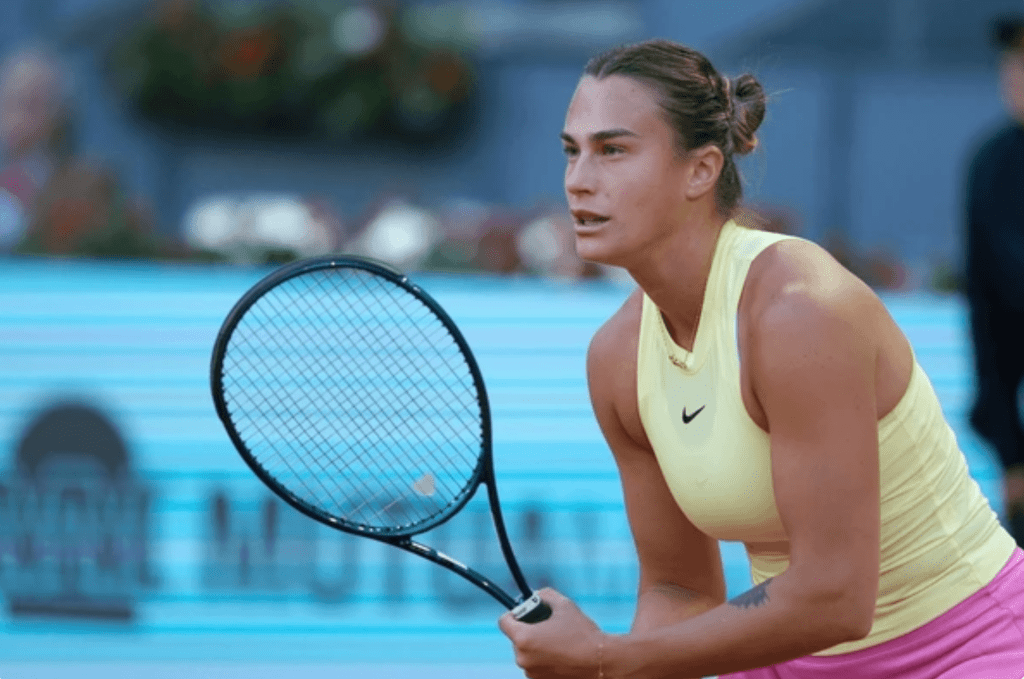
On June 5, 2025, the clay courts of Roland Garros witnessed one of the most astonishing upsets in recent tennis history when Aryna Sabalenka knocked out three-time defending champion Iga Świątek. Sabalenka triumphed by scores of 7-6, 4-6, 6-0, ending Świątek’s 26-match win streak in Paris. Later that day, Coco Gauff overcame French hopeful Loïs Boisson 6-1, 6-2, setting the stage for a blockbuster women’s final between Sabalenka and Gauff.
Sabalenka’s victory showcased raw power and unwavering focus. In the opening set’s tiebreak, she dictated play with a series of booming groundstrokes, winning decisively. Although Świątek rebounded to take the second set, Sabalenka responded in the third with an unblemished 6-0 performance. Observers noted that Sabalenka rarely conceded break points, serving with pinpoint accuracy and attacking every short ball. Her ability to maintain composure under pressure was evident, as she forced errors from Świątek at critical junctures.
Earlier in the day, Boisson—ranked outside the top 350—had captured hearts by reaching the semifinals, thanks to upset victories over higher-seeded opponents. Facing Gauff on Philippe-Chatrier, Boisson grabbed an early advantage, winning the first three games and drawing massive cheers from the local crowd. But once Gauff settled into a rhythm, her defensive skills and deep, penetrating shots shifted momentum. She broke back quickly, eventually cruising through the second set. Gauff admitted afterward that adapting to the boisterous Parisian atmosphere required mental resilience, but once she focused on her game plan—aggressive baseline play and targeted drop shots—she found herself in control.
Sabalenka and Gauff each overcame formidable hurdles on their paths to the final. Sabalenka saved multiple match points against Aryna Svitolina in a grueling quarterfinal that ended 6-4 in the third set, while Gauff survived an epic three-set battle with Petra Kvitová, winning in a dramatic third-set tiebreak. These victories have bolstered both players’ confidence, suggesting they are peaking at precisely the right time.
Ticket demand for Sunday’s final has broken all previous records, and with stadium attendance projected at over 30,000, electric energy is guaranteed. International broadcast audiences are also expected to climb, with early viewing figures indicating a roughly 25 percent increase compared to last year’s women’s championship match. Pundits are already referring to the impending showdown as a “clash of tennis generations,” pitting Sabalenka’s powerful baseline assault against Gauff’s all-court versatility.
Storylines abound: Sabalenka is in quest of her first French Open crown after finishing runner-up in Australia earlier this season. Gauff, who claimed her first Grand Slam title at the U.S. Open two years ago, is striving to become the youngest Paris champion since Rafael Nadal’s legendary run in 2005. Coaches and analysts speculate on strategies—whether Sabalenka’s flat, heavy strokes can penetrate Gauff’s defenses, or if Gauff’s speed and variety will disrupt Sabalenka’s rhythm.
As Sunday approaches, both women are using the extra rest day to fine-tune tactics. Sabalenka has been practicing powerful wide serves to open up the court, while Gauff’s camp is focusing on improving consistency on her second serve and working on sharper angles from the backhand wing. Whatever the outcome, the 2025 French Open will add a new chapter to tennis lore, crowning a champion who must combine mental fortitude with peak physicality on Paris’s storied red clay.
 The News Hour
Leave a comment