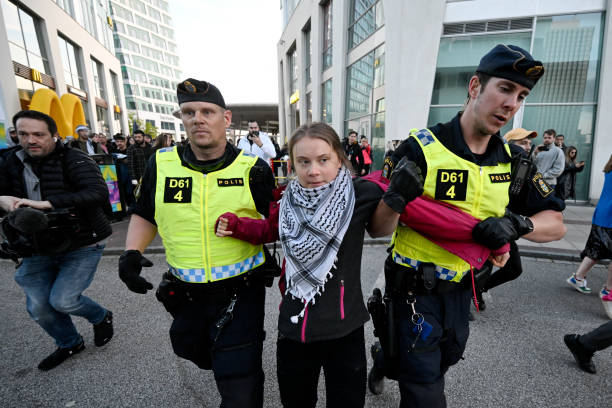
On June 10, 2025, Swedish climate activist and global humanitarian Greta Thunberg was forcibly deported from Israel following her involvement in a controversial aid mission to Gaza. Thunberg, along with 11 other activists, was part of the Freedom Flotilla Coalition aboard the British-flagged yacht Madleen. The vessel aimed to deliver essential medical supplies, food, and clean water to Gaza, which has been under a strict Israeli blockade for over a decade.
The Madleen was intercepted by Israeli naval forces in international waters before reaching Gaza’s shores. Israeli authorities accused the activists of attempting to breach the blockade under the guise of humanitarian assistance. The group was detained aboard Israeli naval vessels for several hours before being transported to the Israeli port city of Ashdod, where they faced questioning and detention.
Thunberg vocally condemned her detention, describing it as an act of “kidnapping” and a blatant violation of international maritime law. She refused to sign a document acknowledging illegal entry, insisting that the mission was peaceful and humanitarian in nature. Upon being deported, Thunberg vowed to continue raising awareness about the humanitarian crisis in Gaza and called for an end to the blockade, which she said perpetuates suffering among millions of civilians.
The incident has reignited global conversations about the Gaza conflict and the broader implications of international activism. Supporters praised the activists for bringing attention to the blockade’s impact on healthcare, infrastructure, and basic living conditions in Gaza. Conversely, Israeli officials maintained that the blockade is a necessary security measure against militant groups in the region and that unauthorized attempts to breach it threaten Israeli sovereignty.
International reactions were swift and mixed. Human rights organizations condemned Israel’s response, accusing it of heavy-handedness and warning against the criminalization of humanitarian efforts. Meanwhile, several governments issued calls for calm and urged dialogue to ease the humanitarian situation. The United Nations reiterated the need for safe passage of aid and protection of civilians in conflict zones.
Thunberg’s deportation underscores the increasing risks faced by activists working in geopolitically sensitive areas. It also highlights the complex intersection of environmental activism, humanitarian aid, and international diplomacy. As Thunberg returns to Sweden, she plans to intensify efforts to mobilize global support for Gaza, leveraging her international platform to campaign for justice and peace in the region.




 The News Hour
Leave a comment